
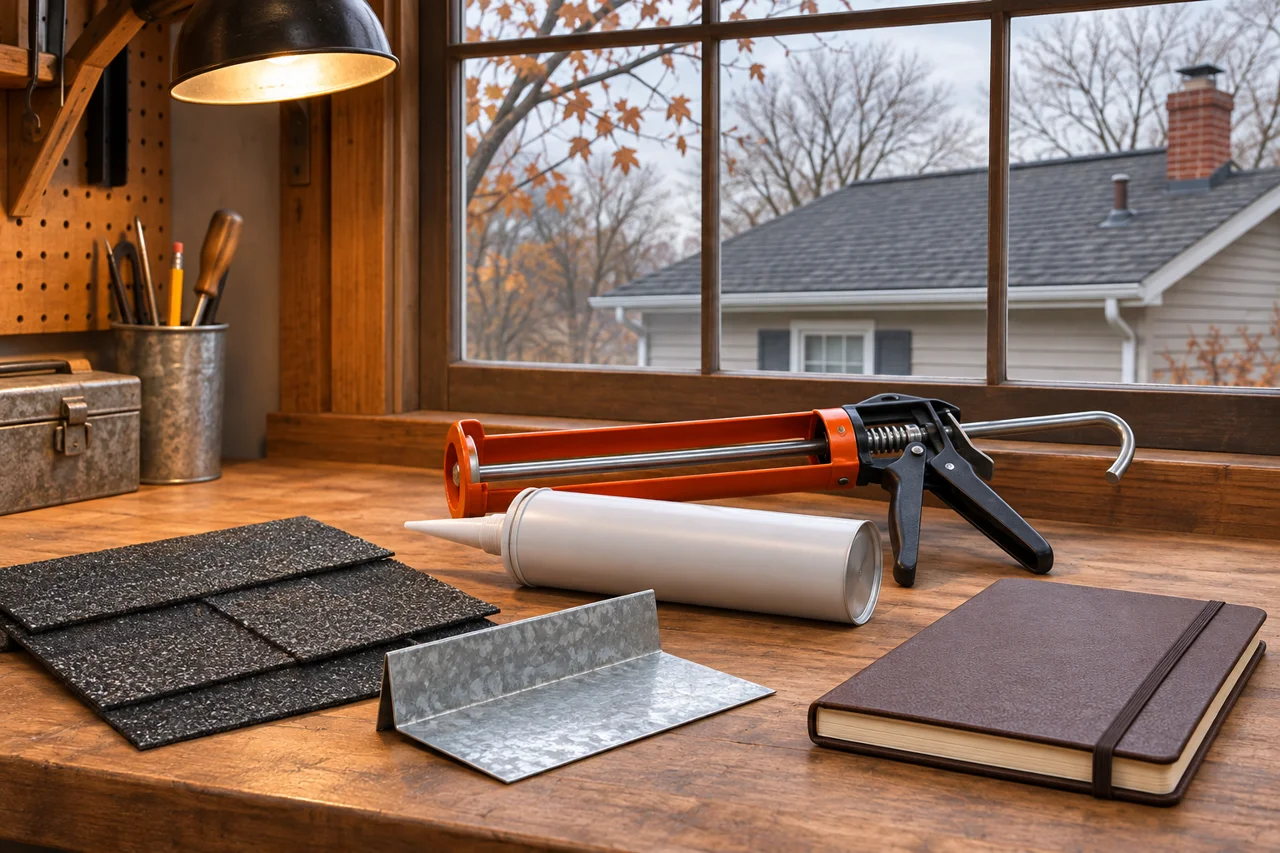
Some roof sealants can be used in cold weather, but there is no single temperature rule or product that fits every roof leak. The material must be compatible with the roof, the surface must meet its preparation requirements, and conditions must remain suitable for the required curing period. A patch that stops a drip today may still need a permanent repair.
For Fort Wayne homeowners planning repairs in November, the useful question is not simply whether a contractor can apply caulk. Ask what failed, which repair detail is proposed, and whether the work is temporary or complete. This guide helps you evaluate that conversation without climbing onto a roof or choosing a product by its advertising.
Start with the defect, not the tube
A ceiling stain does not identify the exact entry point. Before discussing sealant, ask the roofer to explain the suspected water path and show photographs from the inspection. A damaged shingle, failed penetration detail, and flashing problem may require different work. Our guide to finding a roof leak source explains why the location of an indoor stain is only one clue.
Write down when the leak appears, which room is affected, and whether it is recurring. Provide any previous repair invoice or photos you already have. Do not peel away old patches, lift shingles, or climb onto a damp roof to gather evidence. Keep your observations separate from a diagnosis so the contractor can evaluate the whole area.
Read the exact product requirements
“Roof sealant” is a broad description. For example, the technical sheet linked from Henry's 289 product page specifies application at 50°F and rising, dry or damp rather than wet surfaces, and additional weather restrictions during the following 48–72 hours. It also says that product is not recommended over shingles. Those are product-specific limitations, not a rule for every roofing sealant.
This example is not a recommendation to purchase Henry 289 for a residential shingle leak. It illustrates why an apparently relevant product name is not enough. Ask the contractor to identify the selected material and the instructions applicable to your actual roof. If the container, technical sheet, and proposed use appear inconsistent, resolve that with the manufacturer before work begins.
Ask about the whole weather window
A mild afternoon alone does not establish an acceptable repair window. Ask how the installer will check the roof surface, the application conditions, and the conditions required after installation. Request an explanation of what would cause the work to be postponed or changed to temporary protection. Do not assume a warm indoor storage location overrides a product's outdoor application limits.
For scheduling, agree on a practical update process: who checks conditions, when you will receive confirmation, and what happens if the planned day is unsuitable. This article makes no claim about current Fort Wayne temperatures or a recent local storm. The contractor should use actual conditions and the selected product's requirements when making that decision.
Separate temporary protection from permanent repair
The Asphalt Roofing Manufacturers Association specifically distinguishes temporary repairs from long-term repairs. Its example is compatible roofing cement used over a punctured asphalt shingle: this may provide temporary protection, but should not be mistaken for the permanent solution. ARMA recommends qualified roofing professionals for repair work.
Ask the proposal to state which category applies. If temporary work is necessary, request the follow-up step and the person responsible for arranging it. “We sealed the spot” does not tell you whether a damaged component still needs replacement. Keep the temporary-work record with the permanent repair estimate so the two visits remain connected.
A temporary measure should not become forgotten maintenance merely because the ceiling stays dry for a few days. Ask what observations would justify another call and how the contractor will confirm completion. Avoid accepting a universal promise that a patch will last through an entire winter without an assessment of the roof and repair method.
What a clear repair scope should tell you
- The location and observed problem. A marked photo or understandable description should identify the area being addressed.
- The intended repair. Ask whether the work replaces a component, restores a specified detail, or only limits water entry until more work is possible.
- The material and compatibility check. The proposal should identify the product sufficiently for its instructions to be checked.
- The weather contingency. Clarify what happens if safe access or suitable application conditions are unavailable.
- The closeout and follow-up. Request completed-work photos, any remaining limitations, and the next step if the symptom returns.
These details also help you compare estimates. One price may cover a short temporary visit while another includes diagnosis and component replacement. Ask for clarification rather than assuming the less expensive description promises the same result. No price, warranty term, or insurance outcome can be established from the word “sealant.”
If the leak continues while you wait
Tell the roofer promptly if water entry worsens or appears in a different place. Photograph visible changes from a safe location and keep people away from a sagging ceiling or wet electrical fixtures. Do not climb onto a wet or icy roof to add another layer of material. If an immediate electrical or structural danger is suspected, leave the affected area and seek appropriate emergency help.
When safe temporary roof protection is needed, discuss the options with a professional; our emergency roof-tarping guide covers that separate subject. If a previous repair has already failed, review the paperwork and the observations in our guide to leaks after a repair.
Plan the right repair before winter
Contact Big Dog Roofing to discuss a roof repair assessment in Fort Wayne or northeast Indiana. Share the symptoms and any previous repair information, and ask whether the proposed work is temporary protection or a completed repair. The goal is a documented response to the actual roof problem, with material and weather requirements checked before application.