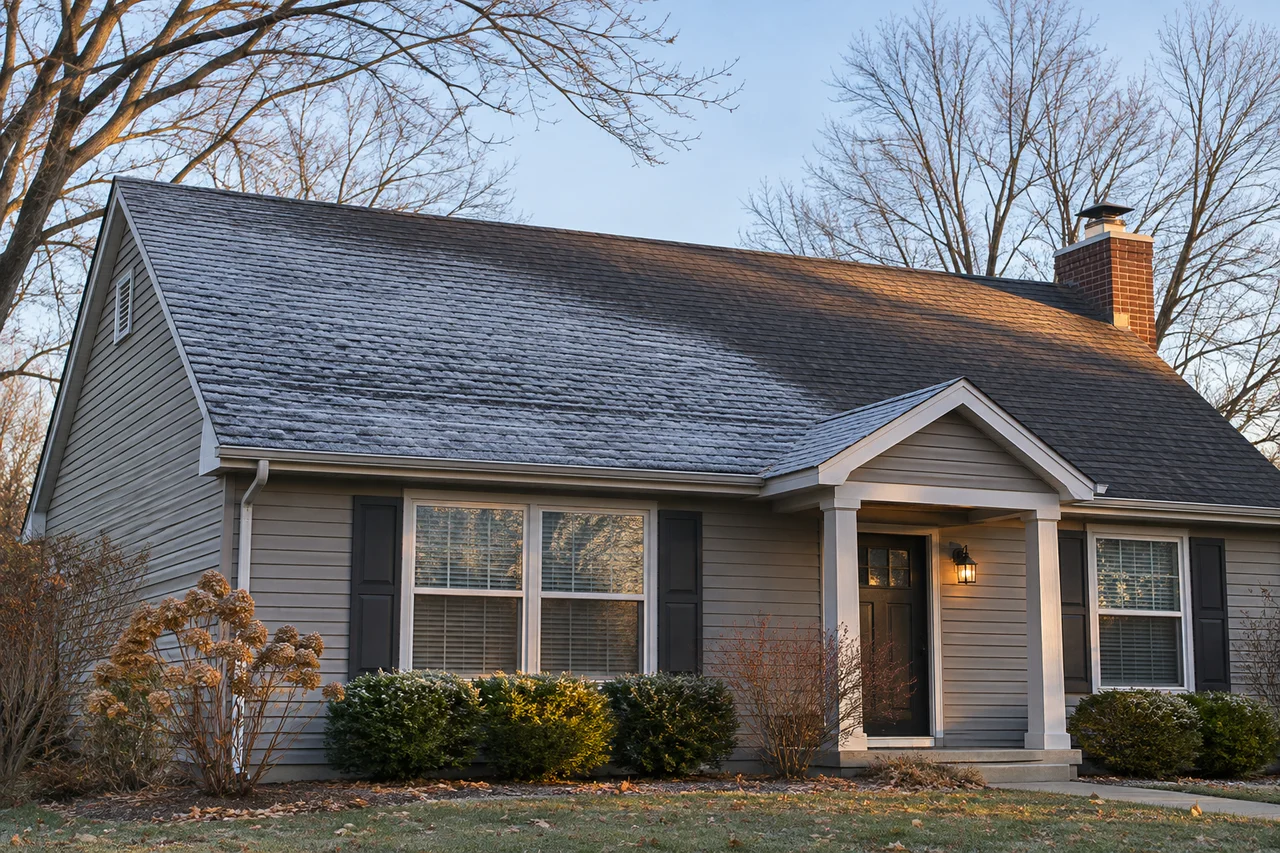
Uneven frost on a roof is a reason to observe, not a diagnosis of roof failure. A bare patch can reflect different surface temperatures, but a driveway photograph cannot tell you whether the cause is sun exposure, heat escaping from the house, or another condition. Before paying for repairs, record the pattern and connect it with any actual signs of trouble.
For Fort Wayne and northeast Indiana homeowners preparing for winter, late November is a useful time to start that record. This guide explains what to photograph when frost appears; it does not report a particular local frost event or forecast.
Why can one part of a roof have frost while another does not?
Frost depends on the temperature and moisture conditions at a surface. The National Weather Service explains that exposed objects can cool below the surrounding air during clear, calm nights. Consequently, the temperature displayed by a weather app is not necessarily the temperature of your shingles. Frost can appear even when an official air-temperature reading remains above freezing.
Look at the setting before interpreting a pattern. Has sunlight reached one slope while the other remains shaded? Are you comparing the same roofing material and orientation? Was one picture taken earlier? These questions help prevent an unfair comparison between two surfaces that experienced different conditions. A neighbor's completely white roof is not a pass/fail benchmark for yours.
Could a recurring bare patch point to heat loss?
It could justify further investigation, especially when the same area repeatedly clears while surrounding areas remain frosted under comparable conditions. However, that observation alone cannot locate an air leak or measure insulation performance.
University of Minnesota Extension explains that heat from a home can warm roof surfaces through heat transfer and air leakage. In snowy conditions, melting on warmer upper roof areas and refreezing at colder edges can contribute to ice dams. That mechanism makes repeat patterns worth discussing with a professional; it does not mean every frost-free patch is an ice dam warning.
Keep frost observation separate from a roof replacement decision. Shingle condition, flashing, roof age, leak history, and the condition of the underlying assembly need their own assessment. A new roof covering is not automatically a remedy for air leakage between the living space and attic.
Make a useful photo record without climbing
Stay on a safe ground-level walking surface and use your phone's zoom. Do not climb a ladder or walk on frosted shingles to improve the view. An incomplete photograph is preferable to a risky inspection.
- Take a wide view first. Include the whole visible roof slope, gutter edge, and nearby trees or structures. This establishes where the patch sits.
- Then take a closer view. Keep the same landmark in frame so someone reviewing the pictures can connect the detail to the wide shot.
- Record the date and time. Note whether the roof was in sun or shade and whether the coating looked like frost or a layer of snow.
- Repeat from the same location. On another suitable morning, use a similar time and angle. Avoid concluding that a change between dawn and midday represents a new defect.
- Describe rather than diagnose. Write “dark oval above the front bedroom” instead of “missing insulation.” Separate what you saw from what you suspect.
Save the original photos in one folder. A short chronological sequence is easier to review than a collection of cropped images with no dates. If you cannot safely see the back slope, simply mark that area as unobserved.
Which details should you include with an inspection request?
Tell the contractor whether this is a new observation or something you have seen over several winters. Identify any roof or attic work completed since the previous season, using records if available. Explain whether the patch is near a roof penetration, a change in roof shape, or a particular room.
Also mention existing ceiling stains, active dripping, or recurring ice at the eaves. Do not wait for another frosty morning if water is entering the house. Keep people away from a sagging wet ceiling and request prompt professional help. For moisture that appears inside the attic rather than on top of the roof, see our separate guide to attic condensation versus roof leaks.
Roof inspection or home energy assessment?
A roofing inspection is appropriate when the question concerns damaged roofing, flashing, a penetration, or an apparent leak. An energy assessment addresses a different question: how heat and air move through the home. Some situations need both, with each professional documenting the findings within their scope.
The U.S. Department of Energy describes blower-door testing and infrared scanning as common assessment tools. A blower door helps measure building air leakage; infrared imaging reveals surface-temperature differences. Ask the assessor what testing is suitable for your home and what written findings you will receive. An ordinary frost photograph is not a substitute for those measurements.
Before approving work, ask which observed condition the proposal addresses, how the diagnosis was established, and how completion will be checked. Request separate descriptions for roofing repairs and any insulation or air-sealing work. Our roof, insulation, and energy-bill guide covers that broader distinction.
Get the roof question answered before winter
If the frost pattern accompanies a roofing concern, contact Big Dog Roofing with your photos and a description of what changed. Ask about an inspection and roof repair for your Fort Wayne-area home. If the evidence points toward air leakage or insulation, arrange an appropriate energy assessment rather than assuming the shingles need replacement.
Sources
- National Weather Service: Dew and Frost Development — surface cooling and frost formation.
- University of Minnesota Extension: Dealing with and Preventing Ice Dams — heat transfer and differing roof temperatures.
- U.S. Department of Energy: Consumer Guide to Home Energy Assessments — diagnostic testing and assessment reports.