
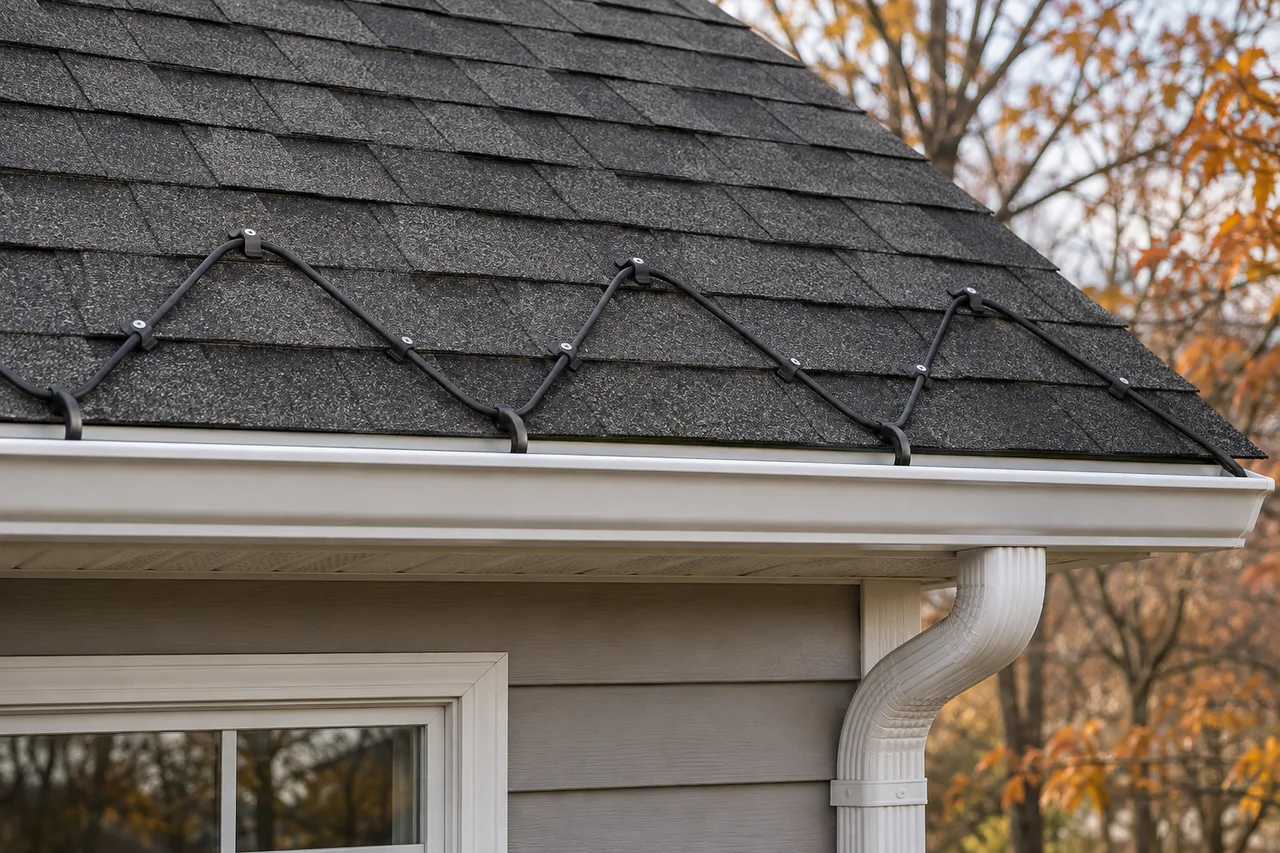
Roof heat cables can help maintain a meltwater drainage path, but they do not correct the attic heat loss that often causes ice dams. Before buying a system for a Fort Wayne home, have the roof condition, history of icing, and electrical requirements evaluated. A cable purchase should follow a diagnosis, not replace one.
November is a useful time to review last winter’s trouble spots and decide what needs attention before snow hides the eaves. This guide explains the questions to ask about deicing cables; it is not an installation diagram or a report of current local weather.
What roof heat cables do—and what they leave unresolved
A roof deicing cable is intended to keep a route open for meltwater. In its ETC kit manual, WarmlyYours describes a path from the roof to the ground through the relevant gutters and downspouts. That is a narrower purpose than keeping an entire roof snow-free.
By contrast, University of Minnesota Extension explains that uneven roof temperatures allow snow to melt higher on the roof and refreeze at colder edges. Heat moving from the house into the attic is a major contributor. Its long-term recommendations prioritize ceiling air sealing and then appropriate insulation improvements.
These are separate work scopes. A cable cannot seal an attic bypass, repair loose flashing, or replace damaged shingles. If an estimate offers cables without explaining the cause of repeated icing, ask what assessment supports that recommendation.
Why advice about heat cables can sound contradictory
Product manufacturers explain how their systems can manage drainage in approved applications. Energy-efficiency guidance may discourage them as a long-term approach. The Minnesota Department of Commerce, for example, advises against heating cables, citing roof-life concerns and added energy use, and emphasizes reducing warm-air leakage.
That guidance is not an Indiana code requirement, and a product manual is not proof that your particular roof needs the product. Together, they support a practical decision: investigate the source of icing first, compare corrective work, and evaluate any proposed cable system against its actual limitations.
For a Fort Wayne homeowner, a useful written recommendation should explain why a drainage aid is being considered, what underlying problems will also be addressed, and what performance the installer is prepared to stand behind. Avoid accepting “no more winter leaks” as a substitute for that explanation.
Bring a short problem history to the inspection
You do not need to climb onto the roof to prepare. Gather existing photographs, repair paperwork, and a simple description of what happened. Include:
- Location: identify the roof edge and the room below it, rather than saying only “the front of the house.”
- Timing: note whether water appeared during rainfall, a thaw, or another condition you actually observed.
- Repeat pattern: distinguish a single incident from a problem that returns at the same spot.
- Previous work: list roof repairs, attic work, gutter changes, and any existing cable system.
- Available evidence: share photos taken safely from the ground and indoor water-stain photographs with dates.
This record helps keep the inspection focused. A stain near an exterior wall does not by itself establish an ice dam, and a photograph of icicles does not identify every possible entry point. Ask the evaluator to separate what is observed from what still needs investigation.
Require a roof-specific and product-specific proposal
If cables remain under consideration, obtain the exact product model and current manual before agreeing to the work. The WarmlyYours ETC manual illustrates why this matters: it limits compatible roof materials, requires appropriate grounded and ground-fault-protected electrical service, and specifies installation when the roof is free of snow and ice. Those conditions cannot be assumed to apply identically to every cable product.
Have a qualified installer explain the attachment approach and a licensed electrician evaluate the electrical work. Ask for a written scope covering:
- The roof areas included, with a marked photograph or drawing.
- Any roofing or drainage repairs required before the system is fitted.
- The party responsible for electrical assessment, controls, and commissioning.
- The operating instructions and maintenance responsibilities you will receive.
- The procedure if the system fails, icing continues, or the roof later needs repair.
Do not infer approval for improvised fasteners, altered cables, or another roof material from a general internet photograph. The illustration on this page is conceptual and is not a layout to copy.
Already have cables? Identify them before switching them on
A previous owner’s installation deserves documentation, too. Find the model, manual, installer information, and any service record. If those are missing, ask a qualified professional to identify and assess the system before use.
The ETC manual calls for preseason inspection, debris removal, and discontinuing use when cable damage is found. Follow the instructions for your own system; do not repeatedly reset a tripping device or attempt an improvised repair. Electrical faults require professional evaluation.
Keep the system information with your roof records. If you schedule roof repairs, tell the contractor that cables are present before the appointment. Agree in advance who will handle any necessary removal, inspection, and reinstatement rather than leaving that responsibility undecided on the workday.
Make the next step match the problem
For recurring icing, an energy professional can investigate heat-loss paths; Extension identifies blower-door testing and infrared imaging as useful evaluation tools. Roof damage and active water entry also need attention. Installing a drainage aid should not delay addressing a leak or wet building materials.
Our guides to attic hatch air leaks and winter attic vents explain related questions to raise during that assessment.
Big Dog Roofing provides roof inspections and repairs for Fort Wayne and surrounding northeast Indiana communities. If you have a previous winter leak or visible roof damage, contact Big Dog Roofing to discuss a roof inspection. Ask separately about the qualified provider needed for any electrical or deicing-system work.