
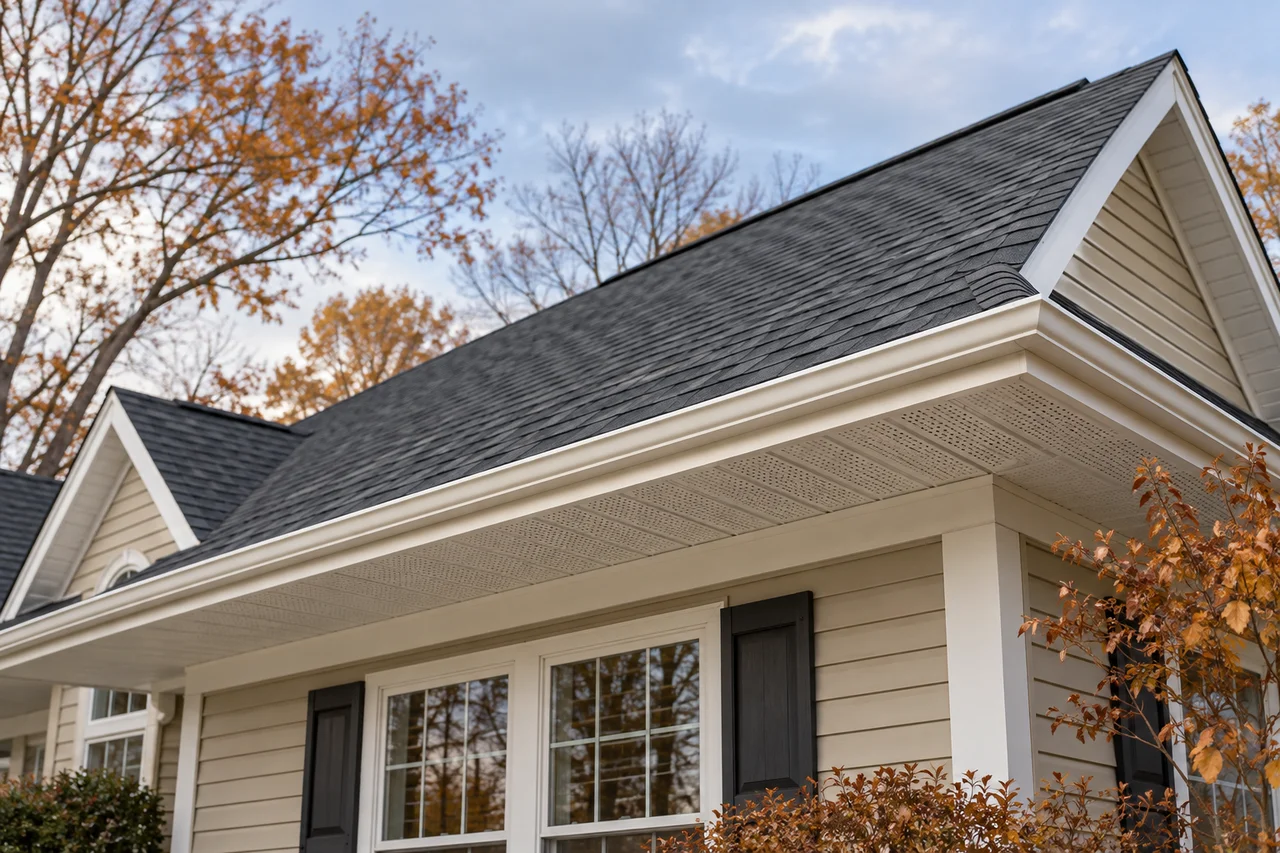
For a home with a conventional vented attic, the attic's ventilation openings should normally stay open through winter. Do not tape over soffit vents or wrap roof vents simply because the weather is getting colder. The important exception is a roof assembly deliberately designed to be unvented; that needs its own insulation and moisture-control strategy.
As November begins in Fort Wayne, this is a useful question to settle before buying vent covers or adding insulation. The goal is a comfortable living space beneath a roof system that can manage heat and moisture. Making a vented attic feel like a heated room is not the goal.
Why a cold attic is not automatically a problem
In a vented attic, outdoor airflow is intentional. ENERGY STAR explains that keeping the attic cold in winter helps reduce the conditions that lead to ice dams. Insulation and air sealing at the boundary with the living space help keep household heat and moisture from entering the attic. These measures work together; closing ventilation openings is not a substitute for them. See ENERGY STAR's attic ventilation guidance.
If an upstairs bedroom feels drafty, describe the room's symptoms rather than assuming the roof vents are responsible. Note where the draft is felt, when it occurs, and whether there is an attic access nearby. That gives an evaluator a specific comfort problem to investigate without changing the attic's airflow first.
Confirm which attic assembly you actually have
The distinction is between the design of the entire assembly, not simply whether you can see a vent from the driveway. The Building America Solution Center describes a vented attic with the thermal boundary at the ceiling, while an unvented assembly brings that boundary to the roofline using appropriate insulation and air-control details. Read its vented versus unvented attic explanation.
Blocking vents in an ordinary attic does not by itself create a properly designed unvented attic. Conversely, if your home already has a documented unvented roof assembly, do not add openings because a general winter checklist says every attic needs them. Ask the contractor to identify the assembly before recommending a change.
Useful records include an insulation proposal, roof replacement photographs, remodel drawings, and any notes describing a spray-foam conversion. A finished attic room or an addition can make the layout less obvious. Tell the inspector which areas were remodeled and which records are missing.
Check for accidental blockages before adding insulation
ENERGY STAR specifically warns against covering soffit ventilation with insulation. Baffles can keep a passage open at the eaves, but the inspection must establish that air can actually enter and move through the intended route. If insulation work is planned, ask about that route before the work begins. Our attic baffle guide covers the questions to put in the insulation scope.
From the ground, look for obvious taped coverings, loose soffit panels, or visibly damaged vent components. Do not climb onto the roof or squeeze into an inaccessible eave to investigate. Photograph the location if you can do so safely, and ask the roofer to distinguish an intentional feature from a blockage.
A protective vent cover is different from a sealed opening
The word cover can be misleading. A purpose-made screen or weather-resistant vent component can protect an opening while allowing ventilation. A sheet of plastic that stops airflow does something different. GAF describes screened vent protection in its guide to preventing animals in the attic.
If the concern is birds, insects, or wind-driven precipitation, ask which component is appropriate for the installed vent and how its airflow is maintained. Request the product name and installation requirements. Do not approve a vaguely described “winter cover” without understanding whether it screens the opening or closes it.
Use this checklist when discussing winter vent concerns
- Identify the opening. Is it an attic intake, attic exhaust, or a separate pipe or mechanical termination? Have an unfamiliar opening identified before altering it.
- Name the actual problem. Is the concern a cold room, visible moisture, a damaged component, or an animal entry point?
- Confirm the assembly. Ask whether the affected area is vented or deliberately unvented, and what evidence supports that conclusion.
- Request a specific correction. Ask what will be repaired or changed, where it is located, and why that addresses the observed issue.
- Record the result. Keep before-and-after photographs, product information, and any recommended follow-up with your roof records.
For example, a homeowner might request help with a cold second-floor room and mention a covered soffit. Those are two observations, not a diagnosis. The evaluator should explain whether they are related and whether the proposed work addresses the room, the attic, or both.
If frost or moisture appears, investigate the cause
Closing a vent because you notice dampness can send the repair in the wrong direction. The Building America Solution Center identifies both control of air leakage from the house and appropriate attic ventilation as important to condensation control. Its cold-weather roof guidance also advises against climbing up to clear snow from roof peaks because of the safety risk.
Record when the moisture appears, where it is visible, and whether rain or thawing occurred. Use our attic condensation versus roof leak guide to prepare for the inspection. Neither a moisture mark nor a cold attic, by itself, establishes a need for a new roof.
Get the roof and soffit checked before changing airflow
If your Fort Wayne home has damaged roof vents, loose soffit, or an unexplained roof-related moisture concern, Big Dog Roofing can assess the condition and discuss appropriate roof repair or soffit and fascia work. Ask which findings fall within the roofing scope and whether insulation or other specialist work also needs evaluation.
Request a free 21-point inspection or call 260.999.0347. Explain what prompted the question about covering vents so the visit starts with the problem you actually want solved.