
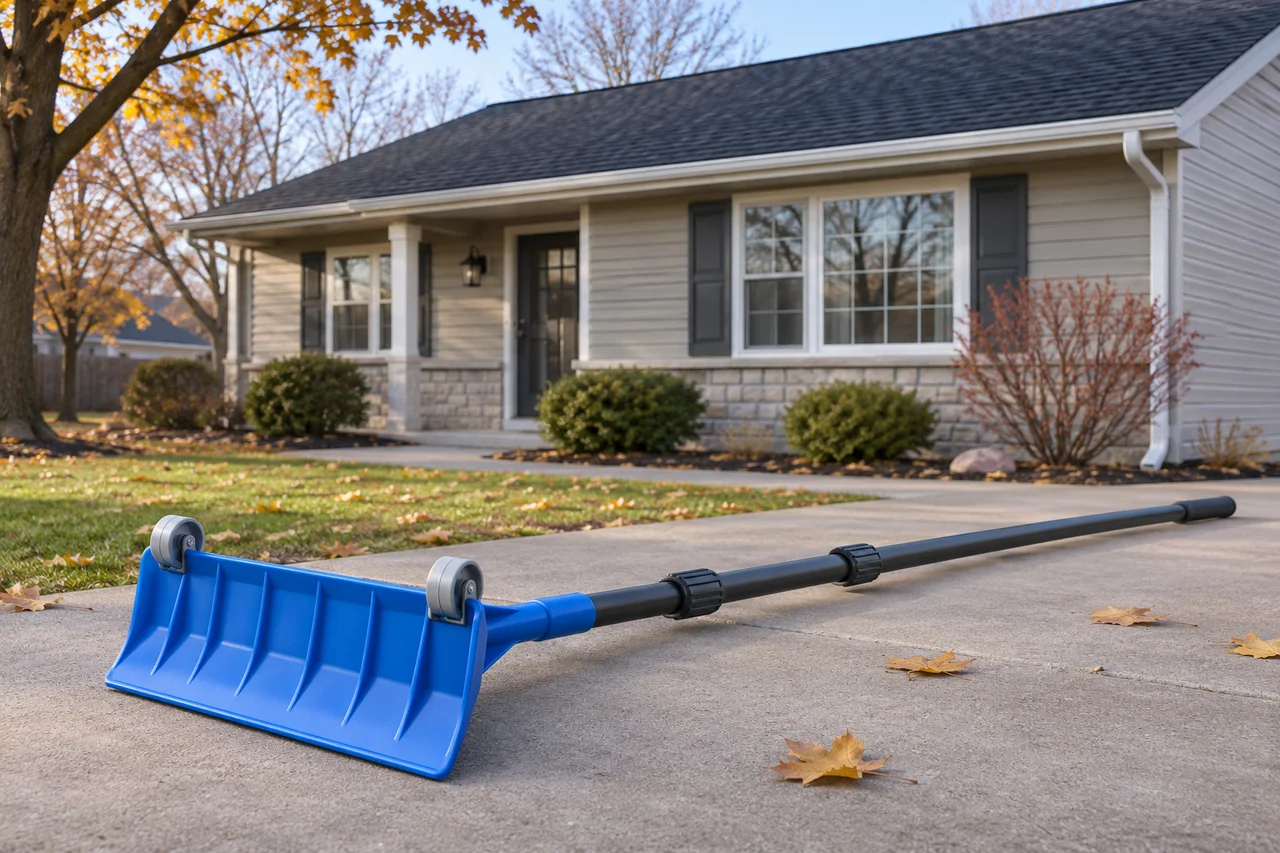
A roof rake can be useful on some homes, but reach, roof condition, and a safe place to stand matter more than owning the tool. Before winter, Fort Wayne homeowners can decide whether ground-based snow removal is realistic or whether a qualified professional should handle it. A rake is not a way to certify that a roof can carry a particular snow load.
This November planning guide focuses on that decision before snow hides the roof edges. It does not report a current local snowfall or recommend clearing every roof after every storm.
Start with your house, not the rake’s advertised length
Walk around the house from ground level while the roof is visible. Identify the eaves, porch roofs, skylights, plumbing vents, and any rooftop equipment. Photograph each elevation and save the images with your home-maintenance records. A photo taken now gives you a useful reference if an attachment becomes difficult to see later.
Write down which roof edge concerns you and why: repeated ice buildup, a previous leak, or simply wanting a winter plan. These are different questions. A second-story eave above a narrow side yard needs a different access assessment than a low garage roof beside an open lawn. Do not assume a longer pole solves either problem.
In its snow-removal hazard alert, OSHA recommends considering ground-based methods where possible and warns against using a snow rake from a ladder. Falling snow, electrical contact, and unstable footing remain hazards even when the operator stays on the ground. Keep people and pets out of the falling-snow area; do not stand beneath it or work near overhead electrical lines.
Questions to answer before buying a roof rake
- Is the tool intended for your roof covering? Read both the rake instructions and the roofing manufacturer’s care guidance. A description that says “roof rake” alone is not confirmation of compatibility.
- Can it be controlled from a suitable ground position? Consider the full extended length, the space needed to move it, and where the snow would land. If reaching the roof requires a ladder, climbing, or awkward stretching, stop the DIY plan.
- How does the head avoid scraping? Ask about the contact surface and any protective spacers or wheels. These features do not make careless use harmless.
- Can you inspect and assemble it as instructed? Check the locking connections and retain the manual. Do not improvise extra pole sections to reach beyond the manufacturer’s intended setup.
- What is the fallback? Save contact information for a qualified snow-removal provider before you need one. Confirm what that provider handles rather than assuming every roofer offers snow removal.
These questions are a purchasing and planning checklist, not a recommendation for a particular brand. The right outcome may be deciding that a rake is unsuitable for your property.
Protect the roof covering: do not aim for bare shingles
FEMA’s snow-load safety guidance cautions that completely stripping snow from a roof can damage its covering and recommends leaving at least a couple of inches. It also describes non-metallic rakes as an option in some ground-access situations and warns against sharp tools. The objective is not to scrape until every shingle is visible.
A rake should not become an ice-chipping tool. If the head catches, the surface is frozen solid, or the work requires force, stop and get advice. Keep the tool away from skylights, flashing, vents, and other roof attachments. A diagram or ground-level photograph of those locations is more useful than trying to discover them by contact.
GAF’s roof snow-removal guidance specifically advises avoiding DIY removal when roof damage is already known. A loose shingle or vulnerable flashing detail deserves assessment before a tool moves across that area. Use our Fort Wayne roof repair service page to learn about evaluating damaged roofing.
Know when the question changes from maintenance to an emergency
There is no universal snow-depth number in this checklist that makes your roof safe or unsafe. Roof design, deterioration, drifting, and the snow’s water content affect the situation. Clearing a reachable strip at the eave does not establish the capacity of the rest of the structure.
FEMA identifies sagging, unusual cracking or popping sounds, and doors or windows that suddenly will not operate among possible signs of roof overstress. If collapse is suspected, stop removal, leave the building, and call emergency services from a safe location. Do not go into the attic to investigate. Structural capacity questions belong with a qualified design professional or local building authority.
Use the fall visit to make a written winter plan
When arranging a roof inspection, send the photographs and ask for answers tied to the actual roof:
- Are there existing shingle, flashing, or gutter defects that should be addressed first?
- Which roof areas or attachments must a snow-removal provider avoid?
- Does the concern call for roofing repair, an attic assessment, or a structural specialist?
- What photographs and observations should you supply if the problem returns?
Keep the answers with the inspection report. Record the date and exact location of any later staining or damage, using the same room and roof-edge names each time. Consistent descriptions help distinguish a recurring issue from a new one.
Snow removal also does not replace correcting attic heat or moisture problems. If winter ice has been recurring, review our winter attic vent guide and discuss the underlying cause during the inspection.
Request a roof-condition check before winter
Big Dog Roofing provides roof inspections and repairs in Fort Wayne and surrounding northeast Indiana communities. If you have damaged shingles, a previous winter leak, or uncertainty about a roof detail, contact Big Dog Roofing to discuss an inspection. Describe the concern and share ground-level photos so the next step addresses your roof’s condition.