
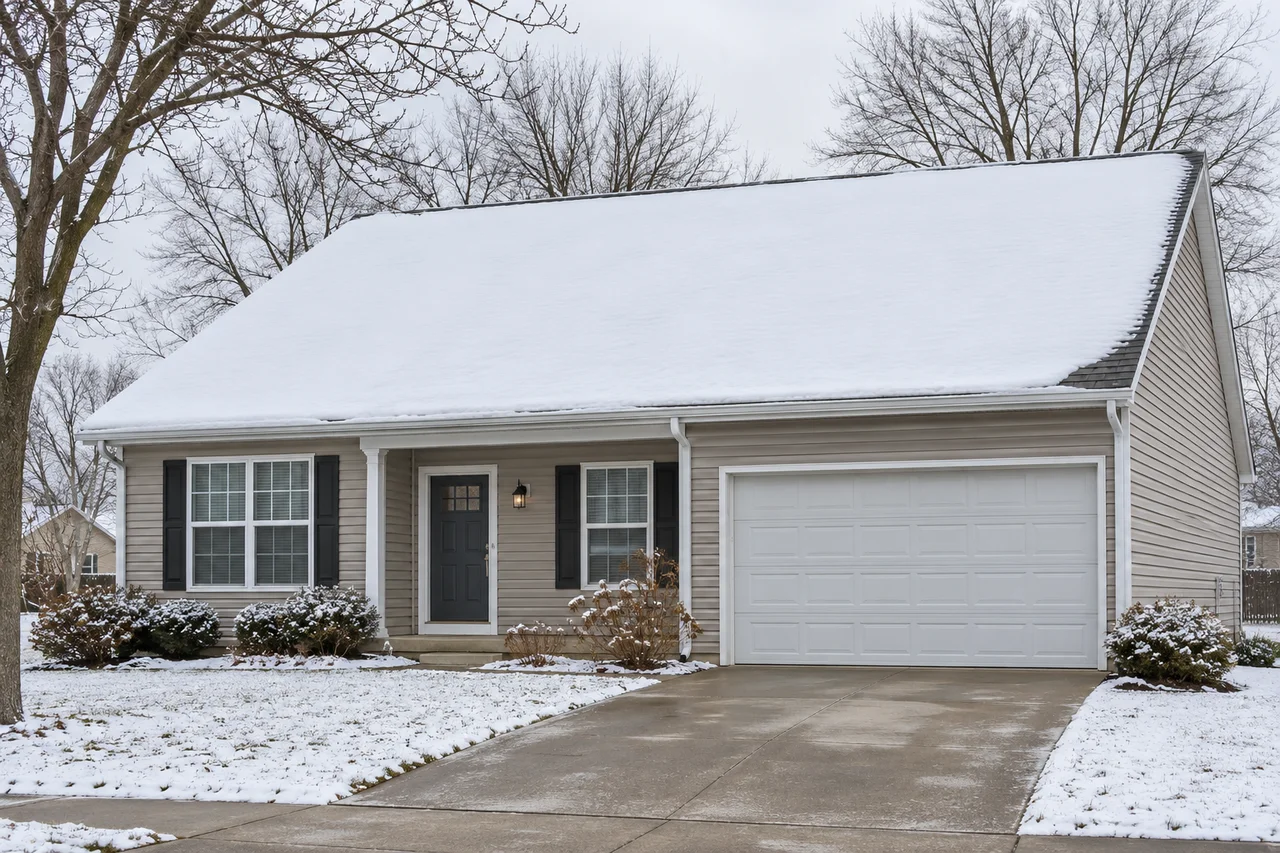
A snow-covered roof can receive a limited assessment, but concealed shingles and flashing cannot be given a complete visual inspection. A useful winter visit should explain what was checked, what remained hidden, and what needs another look after conditions improve.
As Fort Wayne homeowners plan for winter, that distinction matters when scheduling maintenance, investigating a leak, or reviewing an older roof. You do not have to abandon every inspection because snow is present. You do need to avoid treating an incomplete view as proof that the entire roof is sound. This is seasonal planning guidance, not a report of current northeast Indiana snowfall.
What can a contractor learn while snow remains?
The answer depends on access, visibility, and the reason for the visit. Accessible interior areas may reveal ceiling staining or other evidence worth investigating. From suitable exterior viewpoints, a contractor may observe exposed roof sections, visible penetrations, fascia, and gutter condition. GAF's homeowner inspection guidance includes interior and ground-level observations alongside inspection of the roof itself.
Those observations can help establish the next step. They do not turn a hidden surface into an inspected one. A clear front slope does not establish the condition of a snow-covered rear slope. Likewise, a visible section beside a chimney cannot answer every question about the flashing concealed behind it.
Explain your main concern when booking. “I want a general condition review” and “water is dripping near the hallway light” are different requests. The second requires prompt attention to an active problem, even if a complete exterior survey must wait.
What does snow prevent an inspector from confirming?
Structure Tech, a home inspection company describing its own winter inspection experience, explains that even a small snow covering can conceal otherwise visible defects. This is a visibility limitation, not a statement that damage necessarily exists underneath.
Ask the contractor to distinguish three things: an observed defect, a suspected source requiring investigation, and an area that could not be evaluated. Those categories support different decisions. “Rear roof not visible” should remain an open item, rather than becoming “rear roof in good condition” when the report is summarized.
Roof age records and previous photographs can supply history, but they are not a current inspection of concealed materials. A dated repair invoice may identify what was done near a vent; it does not establish what that area looks like today. Keep those documents labeled with their original dates.
Can binoculars or a drone solve the visibility problem?
A different viewpoint can improve the view of exposed areas. It cannot show the surface beneath an opaque snow covering. Before requesting special equipment, ask what specific unanswered question it would resolve.
For example, a photograph may document that one slope is covered while another is clear. That is useful evidence of the visit's limitations. It should not be described as a close inspection of the buried shingles. Equipment choice and safe access belong with the professional performing the assessment; ask what methods are available rather than assuming a particular service is included.
What should the written findings include?
American Home Inspectors Training emphasizes recording areas that were not visible and describing the inspection method. For a homeowner arranging a roofing visit, the following questions turn that principle into a practical review:
- Which areas were viewed? Request locations that are easy to recognize, such as the front slope, rear addition, or garage roof.
- How were they viewed? Ground observations, accessible interior observations, and close exterior inspection provide different information.
- What was concealed? Ask for photographs showing snow coverage and any access restrictions.
- What was actually found? Separate visible damage from possible causes and unresolved questions.
- What happens next? Identify urgent work, any proposed temporary protection, and the areas requiring a return visit.
Before agreeing to work, ask how the findings support the proposed scope. If a quote depends on an area that remains concealed, ask which assumptions are provisional and when the contractor expects to confirm them. Keep the inspection notes with the estimate so the reasoning does not disappear between visits.
Should you remove snow before the appointment?
Do not climb onto a snowy roof or scrape shingles simply to prepare for an inspection. Tell the contractor about the covering and let them determine a suitable approach. Do not pour hot water on the roof or chip away ice to expose a detail for a photograph.
An inspection appointment and a snow-removal service are separate scopes. Confirm whether any removal is proposed, who would perform it, and why it is necessary. Our roof-rake planning guide addresses that separate maintenance question. Removing snow should not be treated as an automatic prerequisite that every homeowner must handle.
Arrange the follow-up before closing the first visit
Ask who will contact whom when the roof becomes clear enough to assess. Set a reminder to check in, but let the contractor confirm whether conditions are suitable. A calendar date alone does not guarantee safe access or complete visibility.
Send the original report and photos when arranging the return visit. Ask the contractor to address the previously concealed areas explicitly and update any provisional recommendations. A brief written comparison between the first and second visits helps you understand what new evidence changed the plan.
If you see interior moisture, preserve the timing and location of the observation. Avoid assuming that the nearest visible roof feature is the source; our guide to finding a roof leak source explains why those locations can differ.
Do not postpone an active leak just to get a complete inspection
Contact a professional promptly if water is entering the house. Keep people away from a bulging wet ceiling or water near electrical equipment. A limited assessment may still support immediate protective action while the full diagnosis remains open. Ask what the initial work is intended to accomplish and what still requires verification.
For your Fort Wayne-area home, contact Big Dog Roofing to discuss the concern and current roof access. Share whether the roof is snow-covered when requesting an inspection or roof repair. The useful outcome is a clear record of what is known, what remains unverified, and the next step for your roof.
Sources
- GAF: How to Identify Roof Damage and What to Look For — interior and exterior observation points.
- Structure Tech: How Do You Inspect a Snow-Covered Roof? — firsthand discussion of concealed defects and limited visibility.
- American Home Inspectors Training: Snow-Covered Roof Inspections — documenting visibility and inspection methods.