
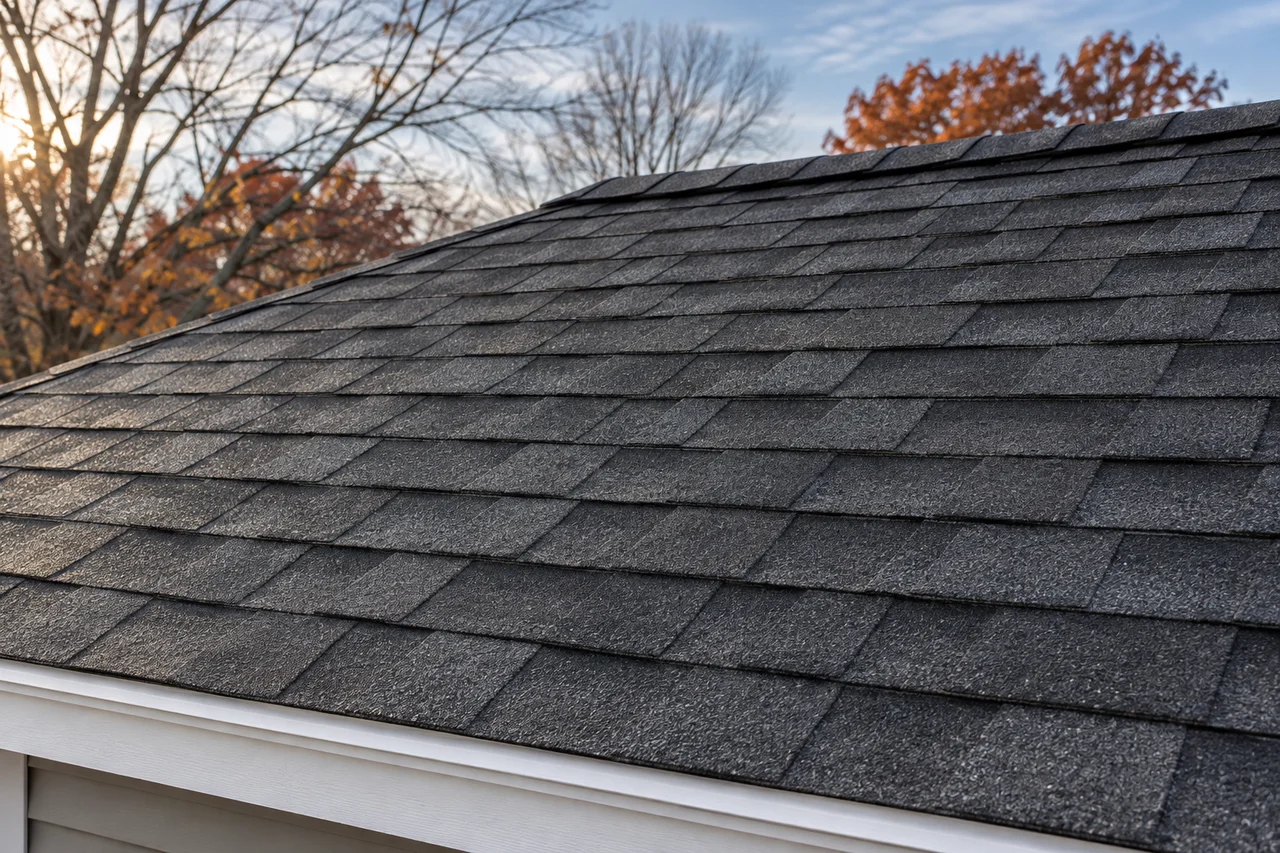
If new asphalt shingles have not sealed during cool weather, ask the installer for a product-specific assessment and a written sealing plan. Do not assume the roof is defective, but do not treat “wait until spring” as a complete answer either. The contractor should explain the installed shingle's requirements, what was done during installation, and what needs attention now.
For Fort Wayne homeowners finishing a roof project in November, this is a closeout question worth settling before the paperwork is filed away. This guide focuses on a roof that has already been installed. If you are still deciding when to schedule the job, start with our winter roof replacement guide.
What does it mean for a shingle to seal?
Many asphalt shingles have a factory-applied sealant that activates with warmth and bonds overlapping shingles together. Fastening and sealing are different parts of the roof assembly. A finished-looking roof does not, by appearance alone, establish that every sealant bond has formed.
The Asphalt Roofing Manufacturers Association explains that sealing time varies with roof slope, orientation, and exposure to sun and heat. That is why a fixed promise such as “all roofs seal in two days” is not a reliable answer for every roof. Its cold-weather installation recommendations also emphasize following the shingle manufacturer's requirements.
Ask about hand-sealing, not just the forecast
Hand-sealing uses an appropriate roofing cement to establish a bond where required. GAF's Hand-Sealing Shingles bulletin calls for it during fall, winter, and cold-weather installation, among other circumstances. It directs installers to the specific shingle instructions for the amount and placement of cement.
The bulletin also distinguishes inadequate heat to activate sealant from a manufacturing defect. Neither observation settles whether an individual installation followed its instructions. Ask the contractor to connect the actual product, the conditions, and the completed work rather than offering a general assurance about shingles.
Do not lift tabs to test them yourself or add a bead of household caulk. This is a product-specific roofing task. GAF warns that excessive roofing cement can run onto the shingle face or cause blistering. More adhesive is not automatically a better repair.
Gather these records before calling the installer
- Product identification: the manufacturer, exact shingle line, and any available bundle-label photographs.
- Installation dates: the dates the relevant slopes were covered, including any separate repair or accessory work.
- The concern: who observed it, which slope or edge was involved, and whether it came from a professional inspection or a ground-level observation.
- Existing closeout material: the proposal, completion photographs, written inspection findings, and any follow-up commitments.
- Visible changes: dated photographs of displaced material, a changed roofline, or an interior water mark, taken only from a safe location.
A useful opening message is: “My roof was installed on these dates using this shingle. The concern is on this part of the house. Please confirm the applicable cold-weather sealing instructions, what was completed, and whether you need to return.” This gives the installer a defined issue to investigate.
What a useful written response should include
Ask for a response that separates completed work from proposed work. These five questions make the next step concrete:
- Which installation instructions apply to this exact shingle?
- Was hand-sealing required, and which areas were hand-sealed?
- What did the inspection find about the affected area?
- Is correction needed now, or is a follow-up inspection appropriate—and why?
- Who will complete the next step, and when will you receive confirmation?
For example, a homeowner might receive a note that a shaded slope needs a closer check. That note should lead to a defined inspection appointment and documented findings. It should not quietly become a promise that the whole roof will take care of itself once the season changes.
Keep this exchange with your roof replacement closeout records. If you receive a separate repair proposal, ask it to identify the affected area and explain the work rather than using only a phrase such as “seal roof.”
When to request prompt assessment
Report visibly displaced or missing shingles, an exposed roof area, or active water entry promptly. Explain that the roof is new and provide the installation records. Those observations deserve assessment rather than being dismissed as ordinary settling.
A photograph from the driveway may help locate a concern, but it cannot establish the condition of a concealed sealant bond. Avoid walking the roof or pulling on shingles to produce evidence. ARMA cautions that cold shingles can be less flexible and that lifting, bending, or roof traffic can damage them. Let the contractor determine a safe inspection method.
If the concern is a raised edge on an older roof rather than a newly installed roof, our curling shingles guide addresses a different repair-or-replacement question.
Does cool-weather installation automatically mean a bad roof?
No. GAF's cool-weather roofing guidance describes additional handling, deck preparation, fastening, and sealing precautions. The useful question is whether the specific installation followed the applicable instructions—not simply whether the calendar said November.
Likewise, an unsealed shingle observation alone does not determine responsibility or a warranty outcome. Keep the product documentation and inspection findings together. For Big Dog's published warranty information, see our warranty page; questions about a particular manufacturer's coverage should be checked against that product's actual terms.
Get a clear next step for your Fort Wayne roof
Big Dog Roofing can assess roofing concerns and discuss appropriate roof repair. If another company installed the roof, bring its paperwork and any existing inspection report so the findings can be evaluated in context.
Request a free 21-point inspection or call 260.999.0347. Tell us when the roof was installed, the shingle product if known, and what prompted the sealing concern.