
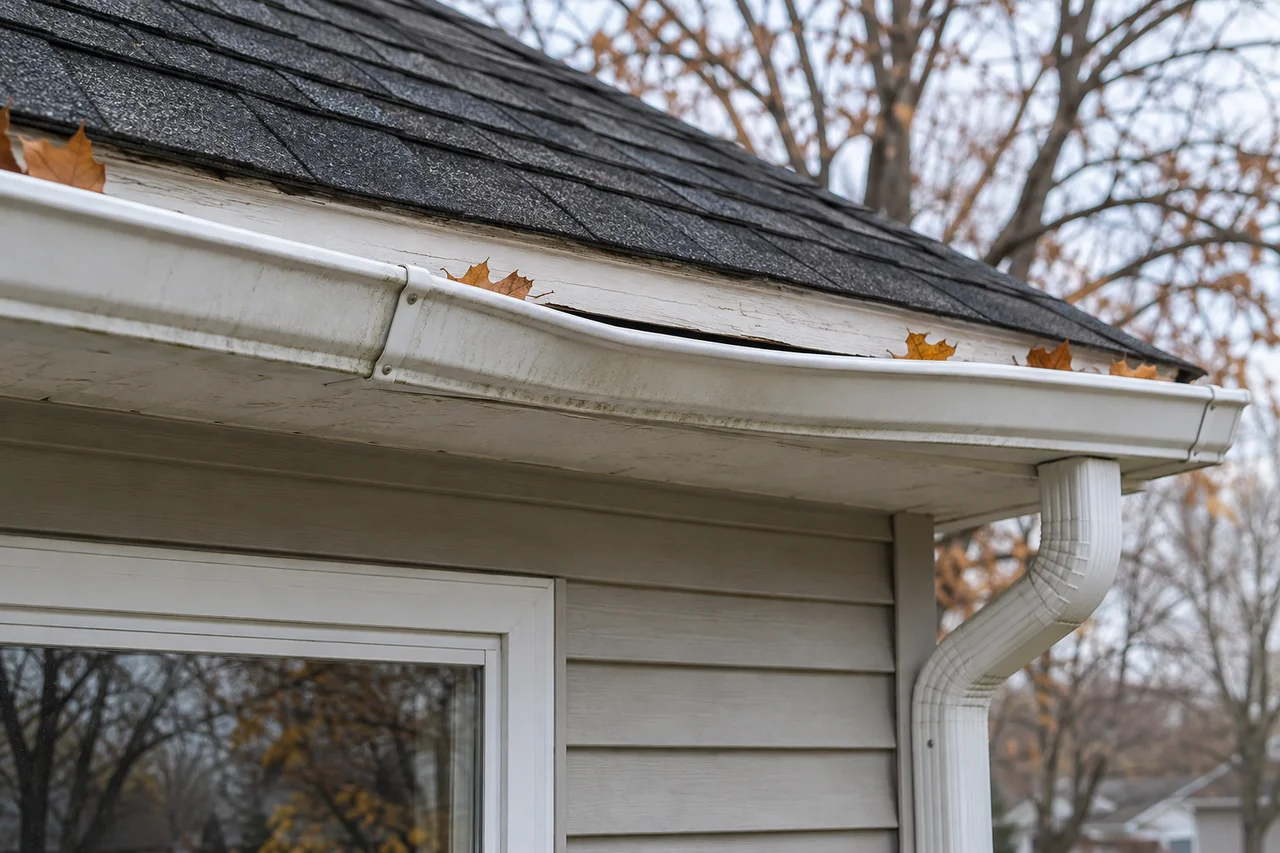
A gutter that sags or pulls away needs its support and drainage checked before it is simply pushed back into place. The visible problem may involve debris, loose attachments, distorted gutter material, or the condition of the fascia behind it. A ground-level photo can document the symptom, but it cannot establish which repair will hold.
For Fort Wayne homeowners planning November maintenance, this is a useful issue to resolve before winter makes access more difficult. This guide focuses on a gutter that has changed position, rather than a leaking seam or a general cleaning schedule. It does not describe a recent local storm.
First, distinguish a sag from the intended drainage slope
A gutter does not necessarily run perfectly level. The Building America Solution Center’s gutter guidance describes a slope toward downspouts so collected water can drain. A smooth, deliberate fall toward an outlet is different from a localized dip, a rolled front edge, or a section visibly separating from the house.
Look from more than one position on the ground. Camera angle and the roofline behind the gutter can make a straight run appear uneven. Photograph the full run, then the suspected problem area, and include the nearest downspout in a separate image. Compare with an older photograph if you have one.
Do not pull on the gutter to test it, lean a ladder against the questionable section, or stand below a visibly loose piece. If it appears at risk of falling, keep that area clear and arrange professional assessment.
What to record without climbing
GAF’s roof-inspection guidance recommends checking gutters for sagging and leaks and looking at the eaves and fascia for deterioration. Binoculars can help with a ground-level look. Record observations rather than guessing at concealed damage:
- Shape: is one spot dipping, an entire run leaning, or only the front lip bent?
- Separation: is there a new gap between the gutter and the fascia?
- Water behavior: during rain, if safely visible from a sheltered location, does water spill over the front, run behind the gutter, or discharge normally at the downspout?
- Adjacent surfaces: note peeling paint, staining, separated trim, or a loose downspout connection.
- Timing: record when you first noticed the change and whether it has progressed.
These observations give the contractor a starting point. Water overflowing at a low spot, for example, does not prove that adding another hanger is the whole answer. The outlet and the rest of the run still need checking.
Ask the inspection to separate four possible problems
1. Debris or an obstructed outlet
Ask whether the gutter and downspout are clear and whether water can reach the outlet. Clearing leaves may address a blockage, but the contractor should reassess the gutter’s position afterward. A cleaned gutter that still hangs away from the house has an unresolved condition.
2. The attachment system
Have the contractor identify how the gutter is supported and where that support is failing, if it is. Gutter Supply describes hangers as supports that attach a gutter to fascia, framing, or another approved assembly. The repair should suit the existing gutter profile and attachment method. Request the applicable product instructions rather than assuming one hanger spacing or fastener works for every home.
3. The material behind the gutter
Ask whether the attachment area is sound or whether further exposure is needed to inspect it. Fresh trim or a metal cover does not tell you the condition of the material underneath. If deterioration is found, the estimate should identify the affected area and how repairs will be authorized. Our fascia repair guide explains that related part of the roof edge.
4. The gutter’s shape and drainage layout
Ask whether the existing section can be reset to drain properly or whether deformation makes replacement more practical. Include the connection to the downspout in that evaluation. The goal is a supported gutter with a functioning water path, not just a straighter-looking front edge.
What a useful repair proposal should tell you
Compare written scopes by the problem they address. A proposal labeled only “fix gutter” leaves too much undecided. Before work starts, request:
- The exact run or section included, marked on a photograph when helpful.
- Whether cleaning, outlet checks, reattachment, resetting the slope, or replacement is included.
- What is known about the fascia and what remains concealed.
- How additional damage would be documented and approved before extra work.
- How the completed drainage path will be checked and photographed.
A localized attachment issue does not automatically require replacing every gutter on the house. Equally, repeated reattachment is not a convincing plan if the underlying support remains unresolved. Ask the contractor to explain why the proposed scope is appropriate for the observed condition.
Why the downspout still matters after the sag is corrected
Follow the water beyond the gutter. PNNL’s guidance emphasizes carrying roof runoff away from the building rather than concentrating it at the foundation. Ask where the downspout discharges and whether its connections remain secure after the gutter work.
If runoff currently lands beside an entry or crosses a walkway, flag that location during planning. Do not accept a repair photograph of the gutter alone as confirmation that the entire drainage route was checked. For a separate look at the ground-level part of the system, read our downspout drainage guide.
Arrange a gutter assessment before winter
Keep your before-and-after photographs and the repair scope together. During the next suitable rain, observe from a safe sheltered location whether the original spill or drip returns. Report the exact location and conditions if it does; avoid climbing to investigate.
Big Dog Roofing offers gutter services in Fort Wayne and surrounding northeast Indiana communities. If a section is sagging or separating, contact Big Dog Roofing with ground-level photos and a description of the change so the team can discuss the appropriate assessment.